Probabl maintains
scikit-learn
Our team builds and maintains robust machine learning algorithms while keeping them simple and accessible, staying true to scikit-learn’s founding philosophy of making predictive data analysis tools efficient and reusable in any context.
-
Employed by Probabl
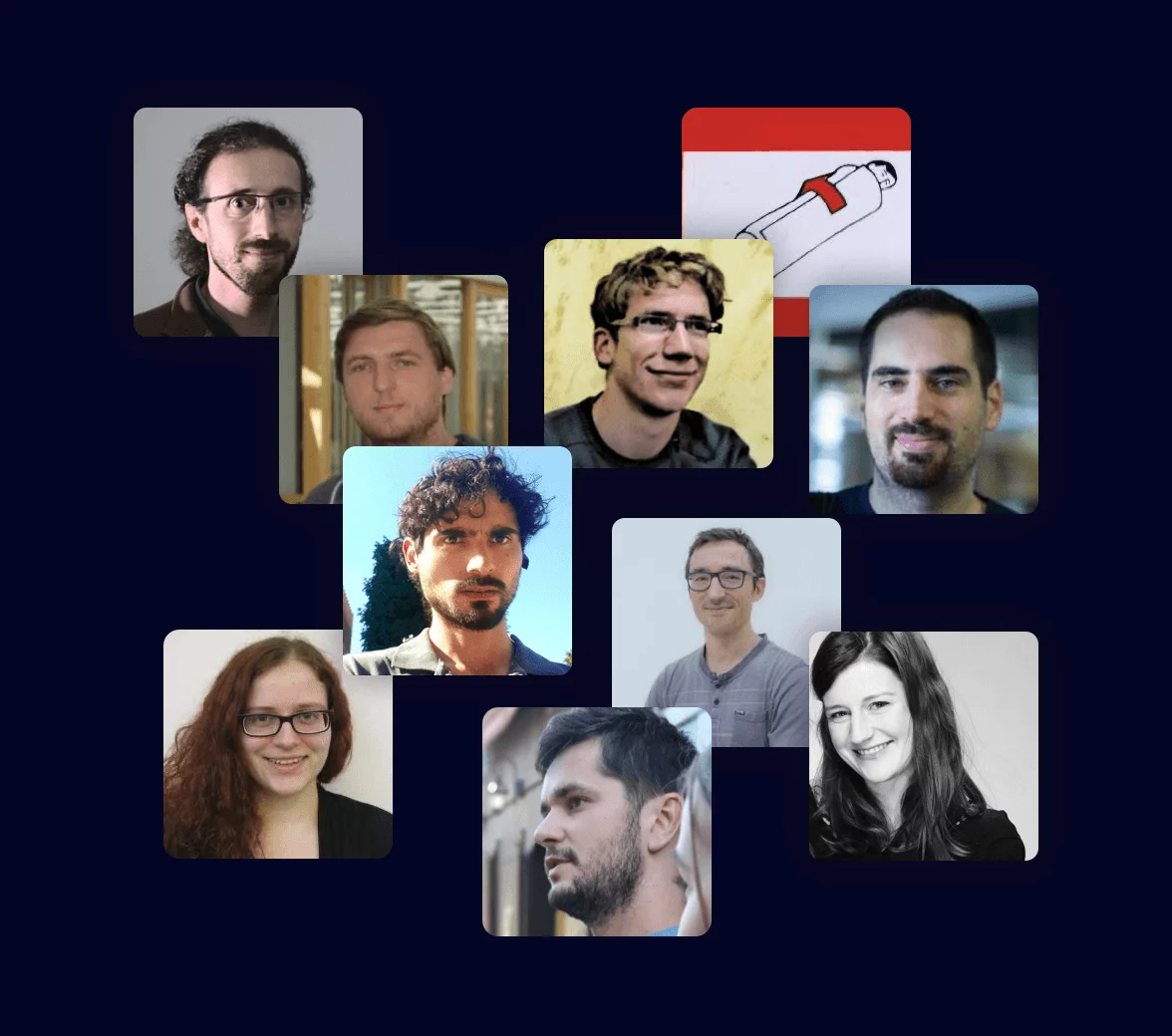
Members of the scikit-learn core team
-
Gaël Varoquaux
Co-founder, CSO
-
François Goupil
Co-founder, Core contributor
-
Olivier Grisel
Co-founder, Core maintainer
-
Arturo Amor
Co-founder, Core contributor
-
Guillaume Lemaitre
Co-founder, Core maintainer
-
Stefanie Senger
Core maintainer
-
Jérémie du Boisberranger
Co-founder, Core maintainer
-
Anne Beyer
Core contributor
-
Loïc Estève
Co-founder, Core maintainer
-
François Paugam
Core contributor
-
From an open source initiative to the world’s most used ML library
-
2007
scikit-learn is created
David Cournapeau publishes scikits.learn as a Google Summer of Code project.
-
2010
First public release
Gaël Varoquaux, Fabian Pedregosa, Alexandre Gramfort and Vincent Michel at Inria take leadership. Version 0.1 beta ships on February 1st. The project gets renamed to scikit-learn.
-
2011
JMLR paper published
The foundational paper is published in the Journal of Machine Learning Research. The community grows to hundreds of contributors. First coding sprint in Spain.
-
2018
Consortium at the Inria Foundation
A consortium of corporate sponsors is created to fund scikit-learn's long-term maintenance: Microsoft, BCG, AXA, BNPParibas Cardif, Intel, NVIDIA, Dataiku. Later joined by Chanel, Michelin, and Hugging Face among others. 42 million documentation visits that year alone.
-
2021
Version 1.0
scikit-learn 1.0.0 ships after 2,100+ merged pull requests. A landmark release after 11 years of continuous development.
-
2023
Probabl is founded
The scikit-learn core team at Inria spins off to create Probabl, with support from the French government's France 2030 program and Inria Participations.
-
2024
Practitioner certifications and skolar
Launch of the scikit-learn practitioner certifications and skolar, the reference learning platform for open-source machine learning.
-
2025
€13M seed, a European record for open source
Probabl raises €13M, the largest seed round for an open-source company in Europe. scikit-learn 1.8 ships with native GPU support via the Array API.
-
2026
skore launches, scikit-learn Central goes live
Probabl officially ships skore, the Data Science platform by the scikit-learn founders. scikit-learn Central launches as the ecosystem catalog and use case explorer. 4.1 billion cumulative downloads reached.
-
Our open source ecosystem
From raw data to models you can trust
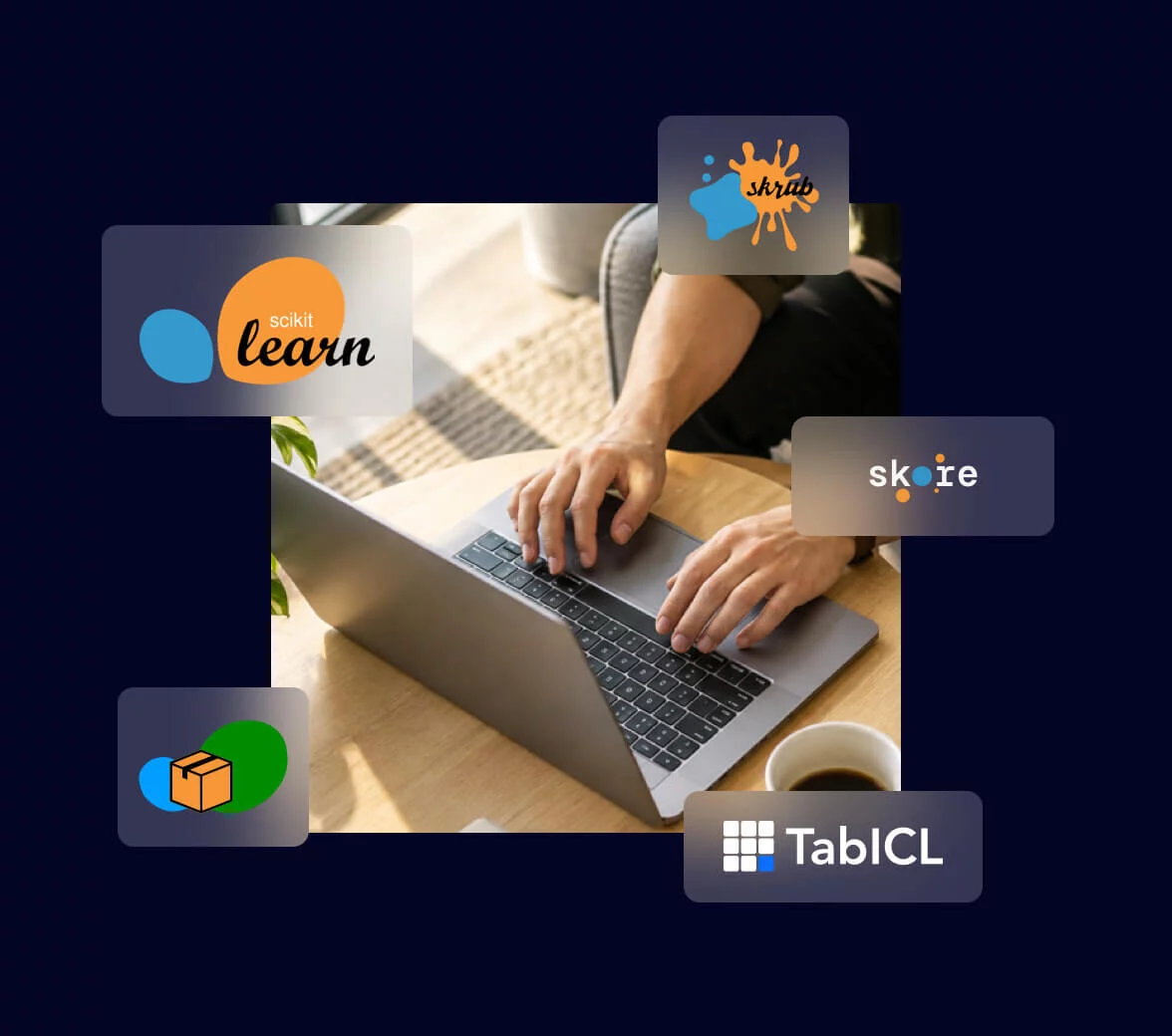
Beyond scikit-learn, we’re expanding our impact across the entire data science pipeline: from where your data lives, with skrub handling the messy reality of heterogeneous tables and dataframes, to guiding you through the maze of experimentation with skore, helping data scientists move faster from raw data to validated, production-ready models.
-
We’re bringing the same commitment to openness, reliability, and accessibility to every stage of data science.
-

Tools and expertise from the source
We build products that encode the methodology and best practices our maintainers have developed over 15 years. Every data scientist can benefit from that depth, from day one.
-
Skore The Data Science platform by the scikit-learn founders
Evaluate any scikit-learn compatible model in one line of code. skore automatically generates the right metrics, feature importance plots, and diagnostics for your use case, with smart methodological warnings that catch common pitfalls before they reach production.
Try Skore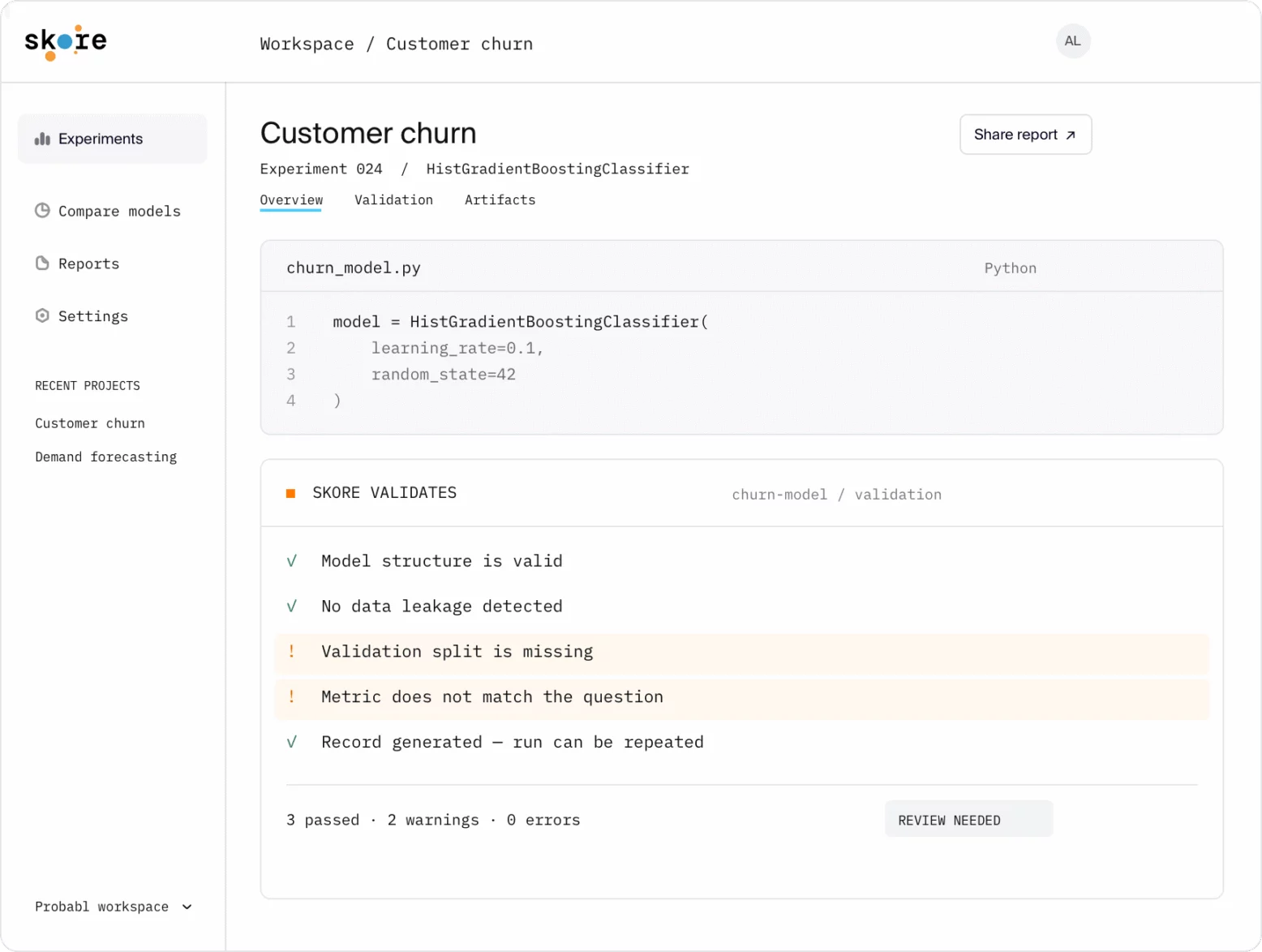
-
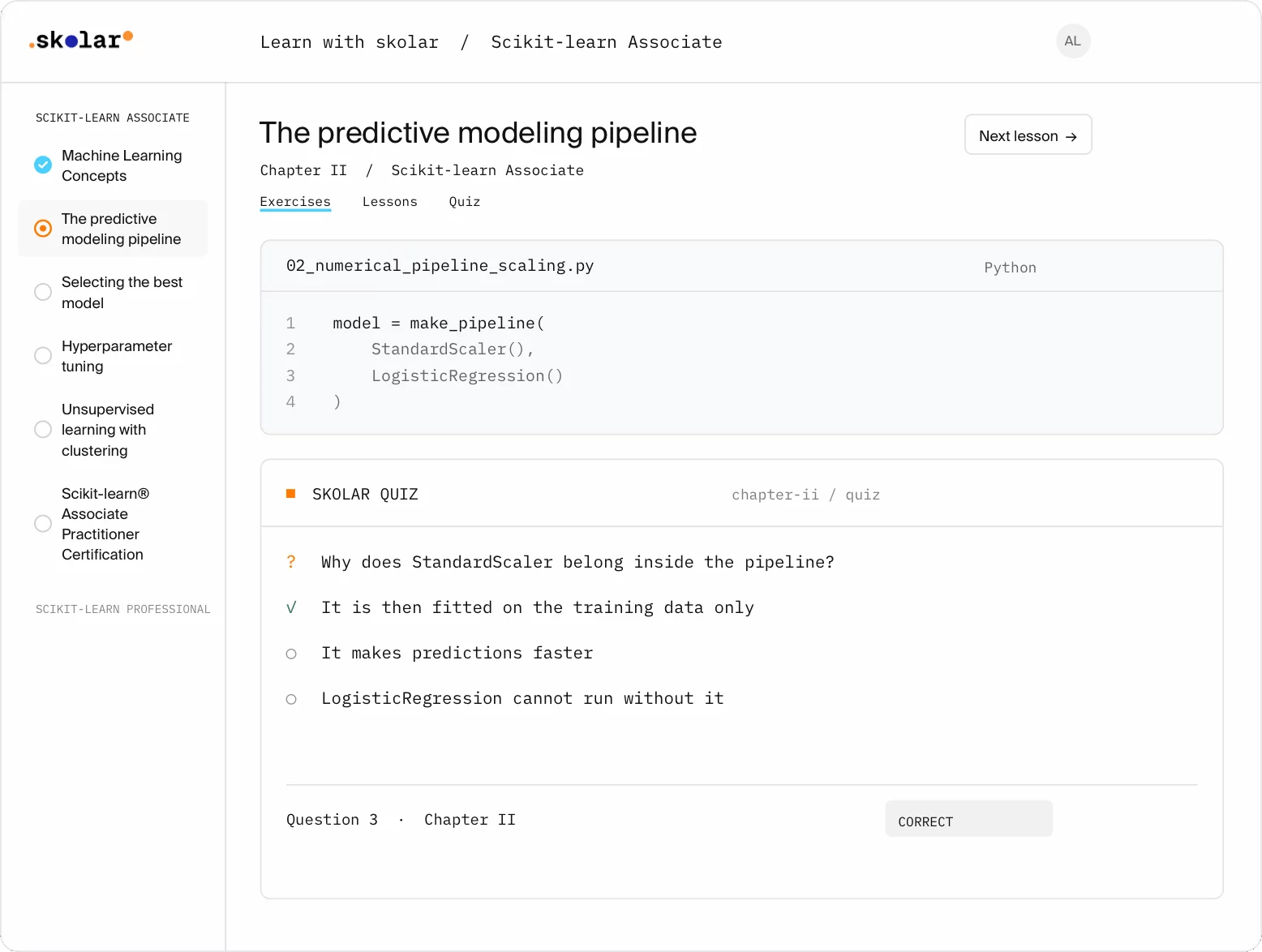
Skolar The official scikit-learn training and certification
Hands-on courses built by scikit-learn core developers, the same people who created the MOOC that reached 40,000+ learners worldwide. Validate your ML expertise with the only official scikit-learn certification.
Sign up