Gaël Varoquaux ·
The gradient of openness of tabular foundation models
By Gaël Varoquaux and Cailean Osborne
TL;DR:
Tabular foundation models (TFMs) are a fast-moving frontier of tabular AI. Like LLMs, they are released along a gradient of openness, from closed to open-weight to fully open. In this post, we explain what these terms mean and evaluate the completeness and openness of 11 TFMs based on which model artifacts have been released (weights, inference code, training code, training data, technical report) and under which licenses. To date, only two TFMs are fully open: TabICLv2 from Inria SODA and Kumo Tabular from NVIDIA. Most TFMs are open-weight and available under licenses that prohibit commercial use. As TFMs move from research prototypes to production, this guide helps you understand under which conditions, if any, you may use, study, modify, and redistribute a given TFM.
The TFM ecosystem is booming
For several years, the scientific and business communities focused on the generative capabilities of LLMs across modalities like text, code, images, audio, and video. The modality that was left behind was tabular data1.
This has changed. The breakthrough started in 2022 when Hollmann et al. released TabPFN2. It brought prior-fitted networks to tabular data: a transformer pretrained on synthetic datasets that makes predictions on a new table in a single forward pass, without being trained on it.
Since then, the number of TFMs has grown quickly. Examples include, but are not limited to, TabDPT from Layer 6 AI, TabICL from Inria SODA, SAP-RPT from SAP, Kumo Tabular from NVIDIA, Causilo from Nums AI, TabFM from Google Research, Seldon from Neuralk, and NEXUS from Fundamental.
Benchmarks such as TabArena3 and BeyondArena4 track this fast-growing list of TFMs and their improving capabilities. TFMs now outperform gradient-boosted trees, the workhorse of tabular machine learning for the last decade, on many prediction problems. But not all. Purucker et al. (2026) show that tree-based and deep learning models still outperform TFMs on non-IID, large, and high-dimensional data4.
Labs are also building foundation models for tasks beyond classification and regression. Examples include SurvICL from Inria for survival analysis and, for time-series forecasting, t0-alpha from The Forecasting Company, Timestral from Mistral, TimeH2O from H2O.ai, and the Granite time series models from IBM.
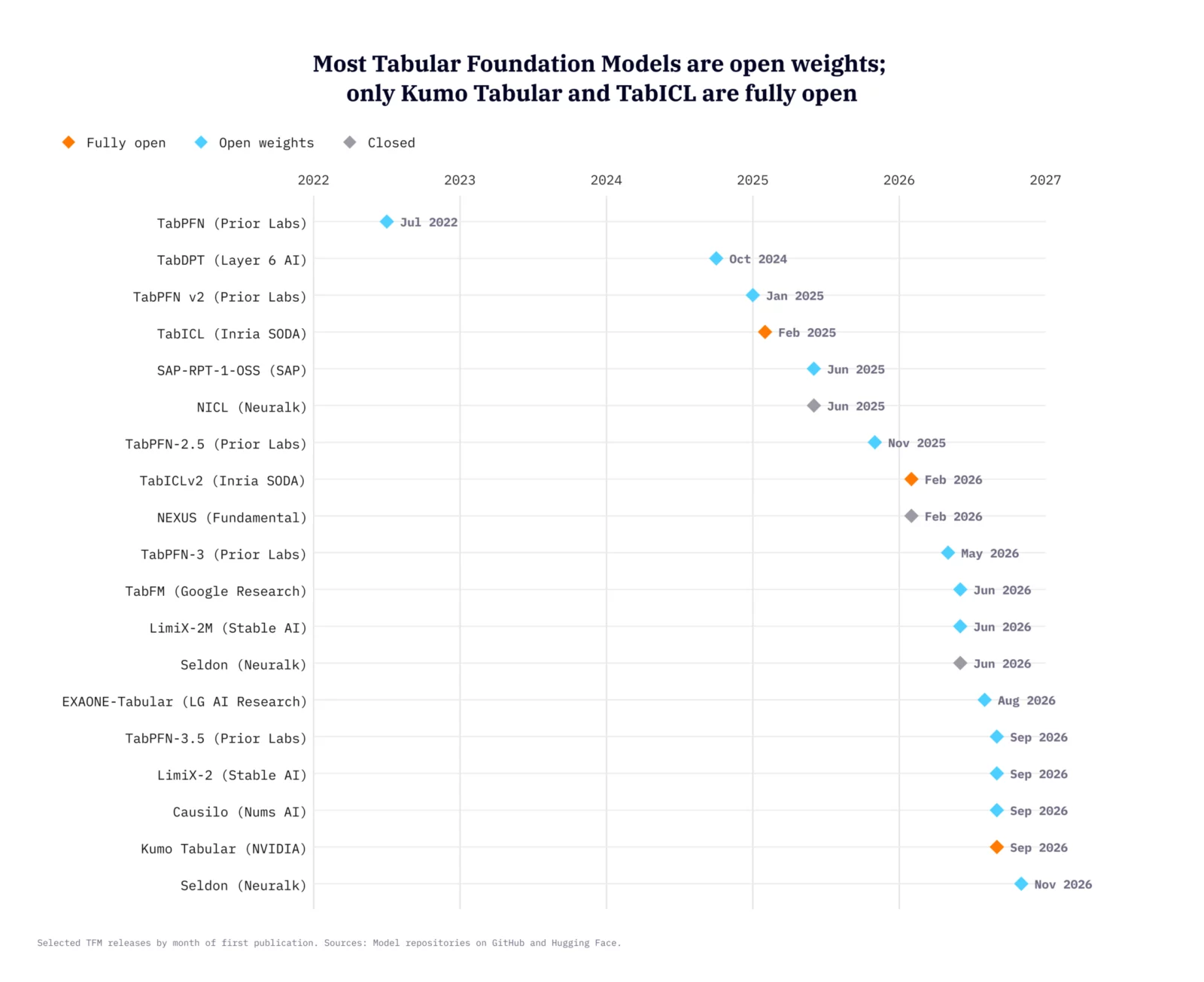
Figure 1: Timeline of TFM releases (non-exhaustive examples)
As we argued in “Open science is powering the TFMs revolution”5, many TFM labs share a culture of open science. Most have released the weights of their TFMs, often with inference code and a pip-installable package that make it easy to download and use the TFMs. This is generally what people mean when they describe a TFM as open-weight. Many labs have also published a technical report describing their methods and benchmarks.
Some labs have gone even further and released the training code and the training data or the code to generate synthetic training data, giving others full transparency into the training recipe and enabling them to fully and freely study, audit, and build on top of the TFM. This is what is known as a fully open TFM.
Since our last article, we have been asked several times to clarify the difference between terms like “open-weight TFMs” and “fully open TFMs”, and why the difference even matters. These are not niche or theoretical questions. They are practical ones for anyone who intends to use, study, audit, modify, or redistribute a TFM – in a scientific lab, enterprise, or elsewhere.
Before you use a TFM, you should be able to answer this question: under which conditions can I use this TFM and do those conditions match my intentions? We’ve written this guidance to help you answer it with confidence.
The gradient of openness of TFMs
In 2023, Irene Solaiman from Hugging Face described access to generative AI systems as a gradient of six levels, from fully closed to fully open6. In the 2026 International AI Safety Report, Bengio et al. (2026) expanded this gradient and noted that the four most restrictive levels are collectively referred to as closed models7. We adapted this gradient in Figure 2. We split open-weight models by whether their license is permissive or restrictive, and added non-exhaustive TFM examples.
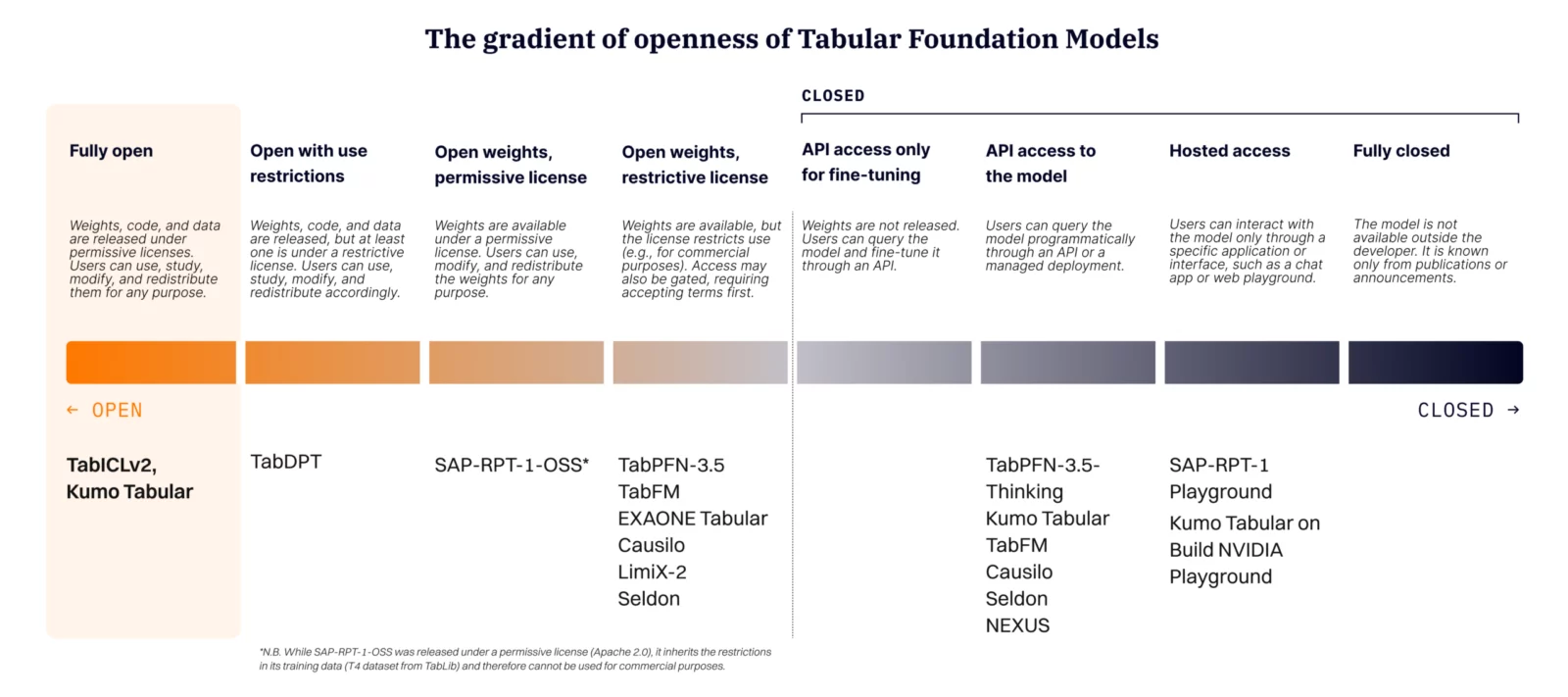
Figure 2. The gradient of openness of TFMs (non-exhaustive examples).
Three insights stand out in Figure 2:
First, only two TFMs are fully open: TabICLv2 and Kumo Tabular. Their releases include not only the weights under permissive licenses but also the complete training recipe (training code, data generator, technical report), so anyone can study failure modes, challenge claims, reproduce results, adapt the model to new use cases, and redistribute it. For example, Alberge et al. (2026) developed SurvICL, which extends TabICL to survival analysis, and released the largest survival analysis benchmark to date with 103 datasets8.
Second, TabDPT comes close but is not fully open. The TabDPT release includes the weights, inference code, training code, and pretraining data, but its training code is restricted to research use.
Third, most TFMs are open-weight and available under non-commercial licenses. You may use, study, audit, and fine-tune the weights, but only for non-commercial or research purposes. Some licenses add conditions, such as accepting terms before downloading (gated access) or crediting the developer.
The gradient describes how you can access a model, not what you may do with what has been released. For that, the Model Openness Framework by White et al. (2024) evaluates a release by which artifacts are released (“completeness”) and whether they are released under open licenses (“openness”)9. We applied this approach to each TFM’s weights, inference code, training code, training data, and technical report (see Table 1).
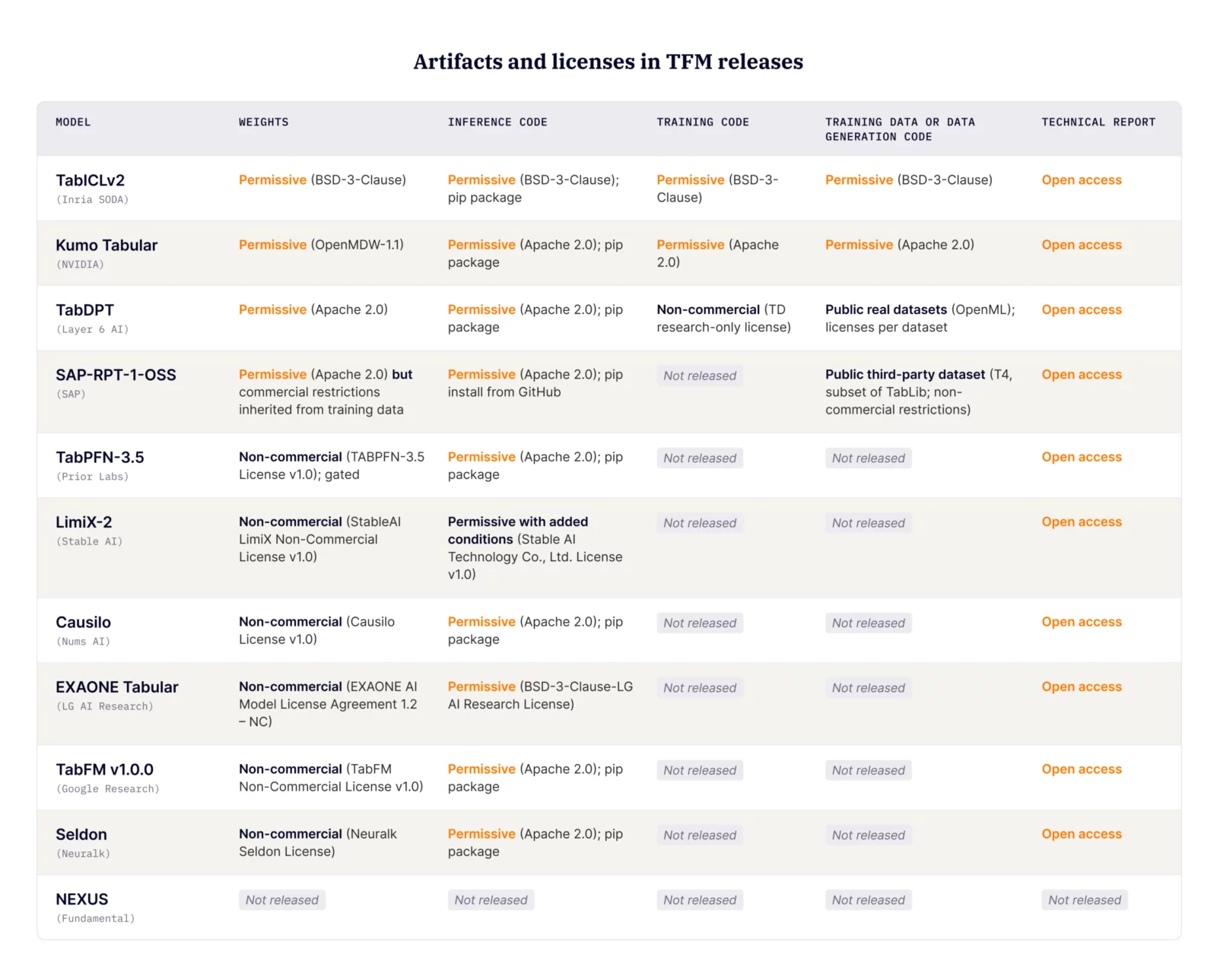
Table 1. Licenses per model artifact in each TFM release
Three patterns stand out in Table 1.
First, the license of the inference code rarely tells you what you may do with the weights. Ten of the 11 TFMs come with permissively licensed inference code, but the weights of only three of those (TabICLv2, Kumo Tabular, TabDPT) are available under a permissive license. As the EXAONE Tabular model card puts it, “installing this package therefore does not grant commercial rights to the weights it downloads”10.
Second, training code and training data are rarely released. Only the TabICLv2, Kumo Tabular, and TabDPT releases include the training code. The TabDPT training code is available under a non-commercial, research-only license.
Third, restrictions can reach the weights through the training data. SAP-RPT-1-OSS is available under Apache 2.0, but it was trained on the T4 dataset, a subset of TabLib. The weights therefore inherit that dataset’s restrictions and can only be used for research purposes11, 12. So, even if a model repository has a permissive license, you need to check that the licenses of other model artifacts do not override the permissive license.
The benefits of the open science flywheel, continued…
In our previous article5, we argued that the open science flywheel is powering the whole TFM ecosystem forward. We drew parallels with the history of open source software. For example, the Linux kernel did not come from a single organization’s roadmap. It grew from thousands of organizations and individuals working together and building on each other’s contributions. Linux now underpins most of the world’s servers, phones, and cloud platforms.
TFMs are far from that level of ubiquity, but the dynamic is similar: open science accelerates progress because the gains compound. Many labs acknowledge this fact in the technical reports of their TFMs.
Let’s take the example of TabICL. The Causilo technical report states that Causilo follows TabICL’s column-then-row architecture. The team at Nums AI added a row-refinement module and an additional column stage before row compression, with both row stages using cross-attention through a fixed number of summary tokens13. Similarly, NVIDIA describes Kumo Tabular as using column, row, and in-context attention that draws on TabICL as well as TabPFN. Its synthetic pretraining data comes from the Kumo prior, a generator that builds on TabICLv2’s prior, and it is pretrained with a three-stage curriculum similar to TabICLv2’s, growing from tables of 1,024 rows to tables of up to 60,000 rows14, 15.
In both cases, the labs started from the published, openly available designs of TabICL and TabICLv2, developed their own architectural and training innovations, documented their choices in their reports, and shared their results with the community. This example shows what full openness makes possible. Because the architecture and synthetic data prior were described in detail in the TabICL and TabICLv2 papers, and the code, including the training code and data generator, is available under a permissive license, other labs could look under the hood, use it, extend it, and evaluate their changes against a known baseline.
It is also worth noting that permissive licenses place no requirement on how derivative work is released. Causilo builds on TabICL’s design, but its weights are available under a non-commercial license13, while the weights of Kumo Tabular are released under a permissive license16, 17. Both choices are compatible with the BSD license of both TabICL and TabICLv2. Only the latter keeps the flywheel spinning for the next labs and TFMs that are yet to come.
Appendix: The completeness and openness of each TFM
In the remainder of this post, we describe the completeness and openness of the aforementioned TFMs in more detail.
Fully open
TabICLv2 from Inria SODA
TabICLv2 is a TFM for classification and regression, pretrained entirely on synthetic data18. The weights are available on Hugging Face under the BSD 3-Clause License, a permissive open source license with no use restrictions, alongside classification checkpoints for TabICLv1 and TabICLv1.119. The inference code is available under the same license as a pip-installable, scikit-learn-compatible package19. The training code and the synthetic data generator are released under BSD-3 for both TabICLv1 and TabICLv219. A preprint describes TabICL20 and an ICML 2026 paper describes TabICLv218. Every artifact may be used commercially.
Kumo Tabular from NVIDIA
Kumo Tabular is a TFM for classification and regression in three sizes (27M, 61M, and 214M parameters), pretrained entirely on synthetic data14, 15. The weights are available on Hugging Face under the permissive OpenMDW License 1.116, 17. The inference code is available under Apache 2.0 in NVIDIA’s pip-installable structured-data-models library21. The training code is released under Apache 2.0 in the structured-data-models repository21. A technical report is available on arXiv, which describes the architecture, data-generating prior, training curriculum, and evaluation15. In addition, a detailed blog post is available on Hugging Face14. Every artifact may be used commercially.
Open with use restrictions
TabDPT from Layer 6 AI
TabDPT is a TFM for classification and regression22. The weights are available on Hugging Face under Apache 2.023. The inference code is available under Apache 2.0 as a pip-installable package24. The training code is available under a research-only license that excludes commercial use25. The training data is a corpus of public datasets from OpenML, each under its own license, some of which may restrict use22. A NeurIPS 2025 paper describes the model22. The weights may be used commercially, but the training code may not be used commercially.
Non-commercial open-weight
SAP-RPT-1-OSS from SAP
SAP-RPT-1-OSS is SAP’s semantics-aware TFM for classification and regression, introduced as ConTextTab and pretrained on real-world tables26. The weights are available on Hugging Face behind a gated access form. Although the model repository has the Apache 2.0 license, the weights inherit the restrictions of their training data and can be used for research purposes only12. The inference code is available under Apache 2.0 and can be installed with pip from GitHub11. The training code is not released. The training data, the T4 dataset (a subset of TabLib), is publicly available under its own restrictions12. A NeurIPS 2025 paper describes the model26. Commercial use requires SAP’s commercial versions, such as SAP-RPT-1.5, available through the generative AI hub on SAP AI Core27.
TabPFN-3.5 from Prior Labs
TabPFN-3.5 is the latest generation of Prior Labs’ TFM for classification and regression, pretrained on synthetic data28. The weights are available on Hugging Face under the TABPFN-3.5 License v1.0, a non-commercial license. TabPFN-2.5, 2.6, and 3 also use non-commercial licenses, while TabPFN-2 uses the Prior Labs License, which is Apache 2.0 with an added attribution requirement29. The inference code and the tabpfn Python package are released under Apache 2.029. The training code and data generator were not released. A technical report describes the training recipe28. Commercial use requires a paid license, available through Prior Labs’ API, private cloud and on-premises deployments, and cloud platforms including AWS SageMaker, Azure AI Foundry, and SAP AI Core30.
LimiX-2 from Stable AI
LimiX-2 is a TFM for classification, regression, and feature imputation, pretrained on synthetic data31. The weights are available on Hugging Face under the StableAI LimiX Non-Commercial License32. Earlier generations were more permissive. For example, the original LimiX weights were available under Apache 2.033 and the LimiX-16M and LimiX-2M weights use the Stable AI Technology Co., Ltd. License, which is derived from Apache 2.0 and adds attribution and model-naming requirements32. The inference code is available under that same license and can be installed with pip from GitHub32. The training code and data generator were not released. A technical report describes the training recipe31.
Causilo from Nums AI
Causilo is a TFM for classification and regression, pretrained on synthetic data13. The weights are available on Hugging Face under the Causilo License v1.0, which permits non-commercial research and free research redistribution34. The inference code is available under Apache 2.0 as a pip-installable package34. The training code and data generator were not released. A technical report describes the training recipe13. Commercial use requires a separate license from Nums AI34.
EXAONE Tabular from LG AI Research
EXAONE Tabular is a TFM for classification and regression10. The weights are available on Hugging Face under the EXAONE AI Model License Agreement 1.2 – NC, which limits use to non-commercial research and education10. The inference code is available under the BSD-3-Clause-LG AI Research License, which permits commercial use, and can be installed with pip from GitHub10. The training code and data were not released. A technical report describes the training recipe35.
TabFM from Google Research
TabFM is a TFM for classification and regression36. The weights are available on Hugging Face under the TabFM Non-Commercial License v1.0, which prohibits commercial and production use37. The inference code is available under Apache 2.0 as a pip-installable package with JAX and PyTorch backends37. The training code and data generator were not released. A technical report describes the training recipe36. For commercial use, Google offers TabFM in BigQuery, currently in preview38.
Seldon from Neuralk
Seldon is a TFM for classification and regression, pretrained on synthetic data39. The weights are available on Hugging Face under the Neuralk Seldon License, a non-commercial license, behind a gated access form39. The inference code is available under Apache 2.0 as the pip-installable neuralk-oss package40. The training code and data generator were not released. A technical report is published on GitHub41. Commercial use goes through Neuralk’s paid API, whose Python SDK is also released under Apache 2.042.
Closed
NEXUS from Fundamental
NEXUS is Fundamental’s proprietary TFM. Enterprises can request access from Fundamental, which offers deployment on any cloud infrastructure43, or via Amazon SageMaker44 and Microsoft’s Azure Marketplace45. No weights, code, training data, or technical report are publicly available.
References
- van Breugel, B., and van der Schaar, M. “Position: Why Tabular Foundation Models Should Be a Research Priority.” ICML 2024. https://www.vanderschaar-lab.com/why-tabular-foundation-models-should-be-a-research-priority/
- Hollmann, N., Müller, S., Eggensperger, K., and Hutter, F. “TabPFN: A Transformer That Solves Small Tabular Classification Problems in a Second.” arXiv:2207.01848, 2022. https://arxiv.org/abs/2207.01848
- Erickson, N., et al. “TabArena: A Living Benchmark for Machine Learning on Tabular Data.” arXiv:2506.16791, 2025. https://arxiv.org/abs/2506.16791. Leaderboard: https://huggingface.co/spaces/TabArena/leaderboard
- Purucker, L., Tschalzev, A., Erickson, N., et al. “Beyond IID: How General Are Tabular Foundation Models, Really?” arXiv:2606.30410, 2026. https://arxiv.org/abs/2606.30410
- Varoquaux, G., and Osborne, C. “Open science is powering the Tabular Foundation Models revolution.” Probabl, 2026. https://www.probabl.ai/blog/open-science-flywheel-of-tfms/
- Solaiman, I. “The Gradient of Generative AI Release: Methods and Considerations.” arXiv:2302.04844, 2023. https://arxiv.org/abs/2302.04844
- Bengio, Y., et al. International AI Safety Report 2026. https://internationalaisafetyreport.org/publication/international-ai-safety-report-2026
- Alberge, J., Bleistein, L., Abécassis, J., Le Morvan, M., Varoquaux, G., and Holzmüller, D. “SurvICL: a Foundation Model for in-context Survival Analysis.” arXiv:2610.22242, 2026. https://arxiv.org/abs/2610.22242
- White, M., Haddad, I., Osborne, C., Liu, XY, Abdelmonsef, A., Varghese, S., Le Hors, S. “The Model Openness Framework.” arXiv:2403.13784, 2024. https://arxiv.org/abs/2403.13784
- LG AI Research. EXAONE Tabular model card. Hugging Face. https://huggingface.co/LG-AI-Research/EXAONE-Tabular
- SAP. sap-rpt-1-oss GitHub repository. https://github.com/SAP-samples/sap-rpt-1-oss
- SAP. sap-rpt-1-oss model card. Hugging Face. https://huggingface.co/SAP/sap-rpt-1-oss
- Cho, M., Jeong, M., Lee, D., Lee, J., and Yoo, J. “Causilo Technical Report.” Nums AI. arXiv:2609.22866, 2026. https://arxiv.org/abs/2609.22866
- Qu, J., Hudovernik, V., Jurkovič, M., et al. “NVIDIA Kumo Tabular Sets a New Accuracy-Efficiency Frontier for Tabular Prediction.” Hugging Face Blog, September 29, 2026. https://huggingface.co/blog/nvidia/kumo-tabular
- Qu, J., Hudovernik, V., Jurkovič, M., Lorenz, C., Holzmüller, D., et al. “NVIDIA Kumo Tabular: Pushing the Accuracy–Efficiency Frontier for Tabular Prediction.” arXiv:2611.23001, 2026. https://arxiv.org/abs/2611.23001
- NVIDIA. Kumo Tabular model card. Hugging Face. https://huggingface.co/nvidia/Kumo-Tabular
- OpenMDW License Agreement, version 1.1. https://openmdw.ai/license/1-1/
- Qu, J., Holzmüller, D., Le Morvan, M., and Varoquaux, G. “TabICLv2: A Better, Faster, Scalable, and Open Tabular Foundation Model.” ICML 2026. arXiv:2602.11139. https://arxiv.org/abs/2602.11139
- TabICL GitHub repository. SODA team, Inria. https://github.com/soda-inria/tabicl
- Qu, J., Holzmüller, D., Varoquaux, G., and Le Morvan, M. “TabICL: A Tabular Foundation Model for In-Context Learning on Large Data.” arXiv:2502.05564, 2025. https://arxiv.org/abs/2502.05564
- NVIDIA. structured-data-models GitHub repository. https://github.com/NVIDIA/structured-data-models
- Ma, J., Thomas, V., Hosseinzadeh, R., et al. “TabDPT: Scaling Tabular Foundation Models on Real Data.” NeurIPS 2025. arXiv:2410.18164. https://arxiv.org/abs/2410.18164
- Layer 6 AI. TabDPT model card. Hugging Face. https://huggingface.co/Layer6/TabDPT
- Layer 6 AI. TabDPT inference repository. https://github.com/layer6ai-labs/TabDPT-inference
- Layer 6 AI. TabDPT training repository and license. https://github.com/layer6ai-labs/TabDPT-training
- Spinaci, M., Polewczyk, M., Schambach, M., and Thelin, S. “ConTextTab: A Semantics-Aware Tabular In-Context Learner.” NeurIPS 2025. arXiv:2506.10707. https://arxiv.org/abs/2506.10707
- SAP. “SAP-RPT-1.5 Model Card.” July 2026. https://www.sap.com/documents/2026/07/b8cb2cd1-5d7f-0010-bca6-c68f7e60039b.html
- Jäger, B., Erickson, N., Grinsztajn, L., et al. (Prior Labs Team). “TabPFN-3.5: Technical Report.” arXiv:2609.17895, 2026. https://arxiv.org/abs/2609.17895
- Prior Labs. TabPFN GitHub repository. https://github.com/PriorLabs/tabpfn
- Prior Labs. “Deployment.” https://priorlabs.ai/deployment
- LimiX Team. “LimiX-2: A Contextual Mechanism Network Towards General Structured-Data Intelligence.” arXiv:2609.17488, 2026. https://arxiv.org/abs/2609.17488
- Stable AI. LimiX GitHub repository. https://github.com/limix-ldm-ai/LimiX
- LimiX Team. “LimiX: Unleashing Structured-Data Modeling Capability for Generalist Intelligence.” arXiv:2509.03505, 2025. https://arxiv.org/abs/2509.03505
- Nums AI. Causilo model card. Hugging Face. https://huggingface.co/nums-ai/causilo
- LG AI Research. EXAONE Tabular technical report. arXiv:2608.25774, 2026. https://arxiv.org/abs/2608.25774
- Kong, W., Louidor Ilan, E., Nie, S., et al. “TabFM: A Zero-Shot Foundation Model for Tabular Data.” arXiv:2609.37959, 2026. https://arxiv.org/abs/2609.37959
- Google Research. TabFM GitHub repository. https://github.com/google-research/tabfm
- Google Cloud. “TabFM adds predictive ML to BigQuery.” September 1, 2026. https://cloud.google.com/blog/products/data-analytics/tabfm-adds-predictive-ml-to-bigquery/
- Neuralk. Seldon model card. Hugging Face. https://huggingface.co/Neuralk-AI/seldon
- Neuralk. neuralk-oss. PyPI. https://pypi.org/project/neuralk-oss/
- Neuralk. Seldon technical report. https://github.com/Neuralk-AI/seldon-technical-report
- Neuralk SDK. PyPI. https://pypi.org/project/neuralk/
- Fundamental. “Fundamental Announces $255M in Funding and Publicly Launches its Most Powerful Large Tabular Model (LTM).” February 5, 2026. https://press.aboutamazon.com/aws/2026/2/fundamental-announces-255m-in-funding-and-publicly-launches-its-most-powerful-large-tabular-model-ltm
- AWS. “Fundamental’s Large Tabular Model NEXUS is now available on Amazon SageMaker JumpStart.” June 3, 2026 https://aws.amazon.com/blogs/machine-learning/fundamentals-large-tabular-model-nexus-is-now-available-on-amazon-sagemaker-jumpstart/
- Fundamental. “NEXUS by Fundamental.” Microsoft Azure Marketplace. https://marketplace.microsoft.com/en-us/product/fundamental.d4283dfa-d0b5-4761-8f41-249fcff5ca24

Gaël Varoquaux
Chief Science Officer @ Probabl

Gaël Varoquaux is a co-founder and Chief Science Officer of Probabl, and a research director at Inria, where he leads the Soda team. He co-founded scikit-learn and works on AI and data science, with a focus on tabular learning and health.